

LOTUS
HEALTH BENEFITS
Enhancing Key Body Functions for Health & Life Extension






Metabolic Health: Blood Sugar, Weight & Lipids
Lotus leaf and seed extracts are repeatedly studied for obesity, blood sugar, insulin resistance, and... Read More.
Antioxidant, Anti-Aging & Cellular Protection
Lotus contains plant compounds like flavonoids that help protect cells from damage and harmful oxidative stress... Read More.

Anti-Inflammatory & Immune Support
Research has associated lotus extracts with modulation of inflammatory mediators and immune-response pathways... Read More.
Gut Health, Prebiotics & Microbiome
Studies show lotus polysaccharides undergo fermentation by gut microbiota and influence beneficial bacteria... Read More.
Heart, Circulation & Liver Support
Lotus compounds are being studied for supporting metabolism, circulation, healthy lipids, and liver defenses... Read More.
Brain, Stress & Neuroprotection
Lotus alkaloids are studied for neuroprotection, oxidative stress reduction, and healthy neuronal signaling support... Read More.
Nutritional Profile & Functional Food Value
Lotus root and seeds provide fiber, vitamins, minerals, protein, and functional bioactive nutritional compounds..... Read More.
Anti-Cancer Research Potential
Lotus compounds show potential to slow harmful cell growth and support natural cell protection processes.... Read More.
Metabolic Health: Blood Sugar, Weight & Lipids
Lotus leaf and seed extracts are repeatedly studied for obesity, blood sugar, insulin resistance, and lipid metabolism. The strongest mechanistic work points to lotus leaf alkaloids and flavonoids - especially nuciferine, quercetin derivatives, and related phenolics - which may influence fat accumulation, glucose handling, PPAR signaling, pancreatic lipase activity, bile-acid metabolism, and gut microbiota. Recent animal studies show reductions in visceral fat, liver fat, and insulin resistance.
Antioxidant, Anti-Aging & Cellular Protection
Across lotus leaves, flowers, seeds, roots, and seedpods, antioxidant activity is one of the most consistent research themes. Lotus contains flavonoids, phenolic acids, procyanidins, alkaloids, vitamin C, and polysaccharides that can help neutralize free radicals in laboratory models and reduce oxidative stress markers in preclinical studies. This matters because oxidative stress is linked with aging, inflammation, metabolic disease, liver stress, and neurodegeneration.
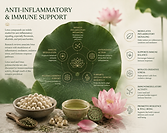
Anti-Inflammatory & Immune Support
Lotus compounds are widely studied for anti-inflammatory signaling, especially flavonoids, alkaloids, and polysaccharides. Research reviews associate lotus extracts with modulation of inflammatory mediators, oxidative stress, and immune-response pathways. Lotus seed and lotus polysaccharides are also discussed for immunomodulatory activity, though much of this remains preclinical.
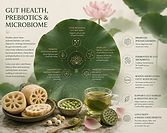
Gut Health, Prebiotics & Microbiome
Studies show lotus polysaccharides can resist digestion, undergo fermentation by gut microbiota, and selectively influence beneficial bacteria and short-chain fatty acid production in in-vitro and animal models. Lotus root also contributes dietary fiber and resistant carbohydrate structure, making it relevant as a whole-food prebiotic.
Heart, Circulation & Liver Support
Lotus leaf and lotus seedpod compounds appear to affect several interconnected health systems simultaneously, especially those involving metabolism, heart health, and liver function. Studies and reviews report lotus leaf effects on blood lipids, fat accumulation, oxidative stress, and liver injury models, while lotus seedpod extracts have been studied for hepatoprotective activity. Key compounds include nuciferine, neferine, flavonoids, and polyphenols, which support healthy lipid metabolism and liver antioxidant defenses.
Brain, Stress & Neuroprotection
Lotus seed plumule is especially important because it contains bioactive alkaloids such as neferine, liensinine, and isoliensinine. These compounds are studied for neuroprotective mechanisms involving oxidative stress, mitochondrial function, amyloid-related toxicity, and neuronal signaling. Lotus leaf extract has also been studied in neurodegeneration models such as C. elegans.
Nutritional Profile & Functional Food Value
Raw lotus root is a low-fat vegetable that provides fiber, vitamin C, potassium, copper, and complex carbohydrates; one 81 g serving is listed with about 4 g fiber, 35.6 mg vitamin C, and 450 mg potassium. Lotus seeds are valued for starch, protein, minerals, and bioactive compounds, making them highly suitable as a functional food.
Anti-Cancer Research Potential
Lotus seed, leaf, seedpod, and plumule compounds - especially aporphine alkaloids, flavonoids, and procyanidins - have shown anti-proliferative, apoptosis-related, ROS-mediated, and cell-signaling effects in laboratory cancer models.